You won an architecture award. Now what?
Winning an architecture award, or being shortlisted, is the end of a long process: the entry, the wait, the result. But it is also the moment the award starts to be worth something to your practice. And that depends less on the award itself than on what you do next.
Many studios post a photo on social media, collect the congratulations and move on to the next project. The recognition stays there, in a post that disappears from the feed within days. What to do when you win an architecture award? This article explains how to keep the recognition working for you: with clients, with the press and in your next entries. It applies to architecture awards in Portugal as much as to international ones.
What you gain from an award
People who hire an architect rarely judge a project from technical drawings. They decide, largely, on trust. An award is a quick way to build it, because someone independent looked at your work and singled it out.
This is what recognition does for you:
- It gives confidence to decision-makers. Clients, developers and homeowners compare practices. An outside distinction carries weight.
- It opens doors to new awards. Anyone already shortlisted or awarded arrives at the next entries with a stronger résumé.
- It gives journalists a reason to write. A shortlisting is news. A project without context isn't always.
- It brings invitations. Talks, juries, panels and interviews come more easily to someone with a recognised track record.
- It values the people who built it with you. Client, engineers, contractor, suppliers, photographer. Sharing the recognition strengthens those relationships.
But it only works if it is visible: recognition nobody sees changes nothing.
Who is winning awards
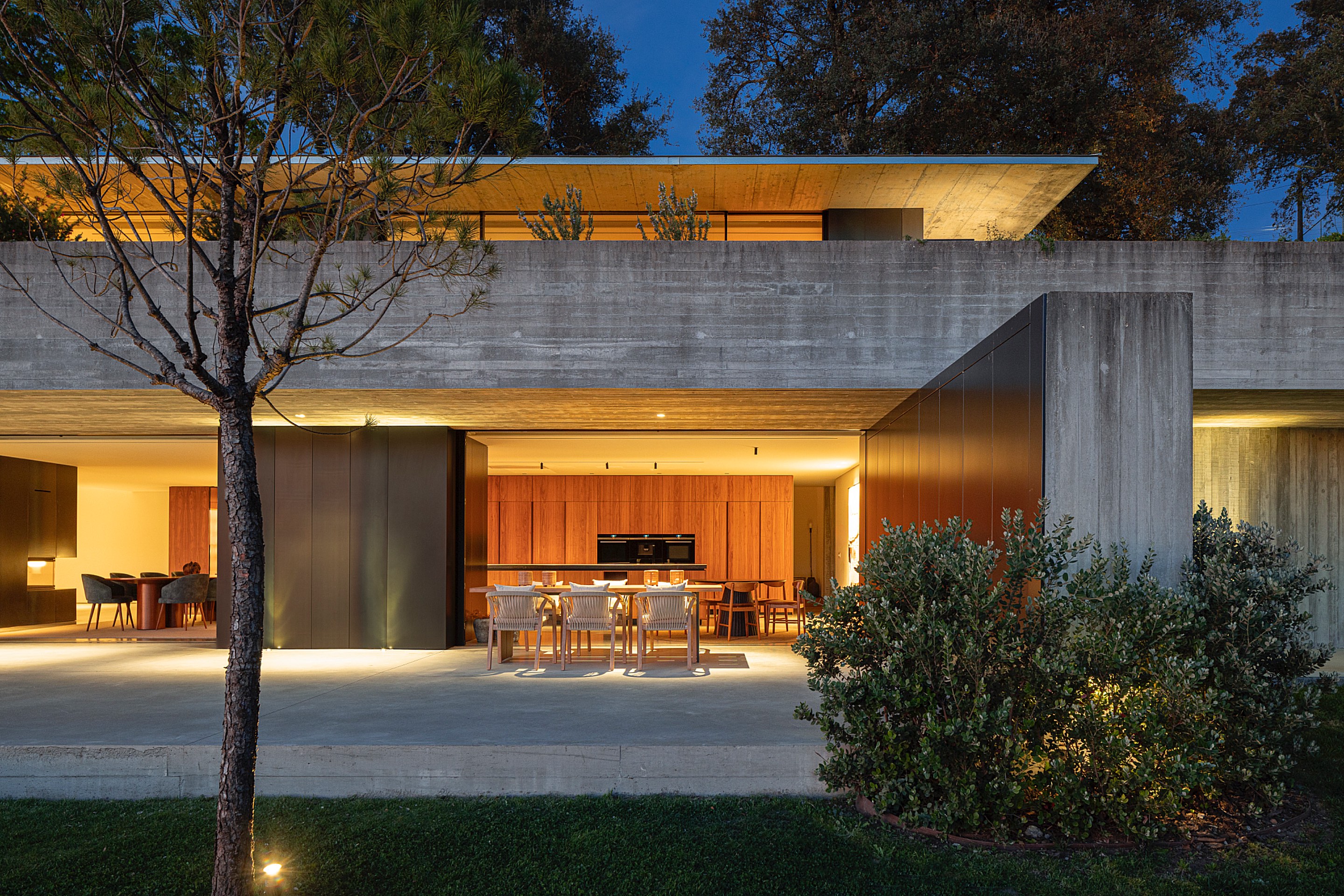
Recent projects from studios that use Awarded Architecture. Each one has its own page, with the award and credits to the studio and the photographer.
Before announcing, confirm what you can say
The first thing to do is not to post, it is to read the rules and talk to the organisers. Some awards require silence until the official announcement (an embargo), and announcing early can jeopardise your entry.
Also confirm:
- How to use the badge or logo. Each award sets its own terms. Ask for the official material and don't alter it.
- Images and credits. Make sure you can use the photographs in this communication, and always credit the photographer.
- The facts. Award name, category, year, project and result, written accurately. A shortlisting is not a win, and saying so correctly is part of your credibility.
Tell the people who were with you first
Before social media, tell the people who made the project possible: the client, the team, the engineers, the contractor, the photographer. The client believed in the project before it existed, and it is only fair they hear the news from you, not from a post.
It isn't only courtesy. They are also the people most willing to share the recognition, and a recommendation from someone who worked with you carries a lot of weight with those who don't know you yet.
Put the recognition where people look for you
When someone hears about your practice, they go to your website or your social profile. That is where the award has to be visible, not just in an old post.
- On your website: the badge on the page of the awarded project, and a dedicated page listing awards and shortlistings (year, award, project, result).
- In your email signature, where it is seen in every message you send.
- In your Instagram and LinkedIn bios.
- In your résumé and studio presentation: include the award in your biography and in the materials you show people who don't know you yet.
- In commercial proposals and presentations to new clients, next to the project the award refers to.
Share it on social media
Post with the official link to the award and tag the people who worked with you: client, partners, photographer. It lends credibility to the post and takes it to more people, because everyone tagged tends to share it.
The tone depends on the moment. For a shortlisting, invite people to follow along (and to vote, if there is a public vote). At finalist stage, keep the anticipation going. For a win, thank people and celebrate. And it is worth announcing the shortlisting, not only the win: it already shows the project was chosen from many.
Avoid posting only once. If there is a vote or several rounds, come back to the topic in different formats, such as a carousel, behind-the-scenes of the build or a short video.
Send a newsletter to all your contacts
A newsletter reaches people who already know and trust your work. Send it to all your contacts: clients and former clients, partners, suppliers, fellow professionals and anyone who follows you by email. It is also the most direct way for the news to reach people who aren't on social media.
If you don't have a newsletter, that's no obstacle: a short email with an image of the project, the news and the official link to the award does the same job.
Talk to the people who write about architecture
A shortlisting or an award is news, and three kinds of outlets may want it:
- Specialist press on architecture and design.
- General press, in the culture, design or property sections.
- Regional press, from the district or city of your practice or the project. For these outlets you are a local story, and a local story can later reach bigger outlets.
Make life easy for the writer. Send everything in one email: a short text about the project and the award, the credits, good-resolution images (with credits) and a contact. Your national or regional architects' association can also help spread the news, as can the university where you studied, which often wants to share the path of its former students.
Produce new material about the project
If you haven't already, consider a new professional photo shoot of the awarded building, or a video and a making-of. The aim is to highlight the details that impressed the jury, which often don't appear in the images you used for the entry.
This material gives you fresh content for your website, social media, the press and presentations, and keeps the subject alive after the announcement.
Make the most of the awards ceremony
If the award has a ceremony, go. It is a good occasion to meet other architects, property developers and journalists, and to make the project known to those who may need it one day.
Use the award in your day-to-day work
An award doesn't lose value with time, as long as you state the year and the result accurately. It keeps working in entries to other awards and in any invitation to speak, to sit on a jury or to join a panel. Accept those invitations: that is how one recognition leads to the next.
What next? The next architecture awards, in Portugal and worldwide
Anyone who has already won an award tends to have better chances in the next ones: the résumé counts and your work has already been judged by a jury. So it is worth continuing to enter. The hard part is not missing deadlines: each award opens in different months, with different rules and costs.
Awarded Architecture brings together architecture awards in Portugal and worldwide in a single calendar, with filters by typology, location, cost and dates. You save the ones you're interested in and get alerts before each deadline.